
Anal Fistula Treatment in Jabalpur
- Home
- Anal Fistula Treatment
Anal fistula is a painful and often recurring condition that affects the area around the anus. Many patients experience repeated swelling, discharge, and discomfort but hesitate to seek medical care because the symptoms involve a sensitive part of the body. However, delaying treatment can allow the infection to spread and lead to more complications.
An anal fistula does not usually heal on its own. Proper medical treatment is necessary to close the infected tract and prevent repeated infections. At Surgicare Clinic, patients receive specialized Anal Fistula Treatment in Jabalpur under the care of Dr. Sanjiv Warkhede, a highly experienced Colorectal & Laparoscopic Surgeon with more than 20 years of surgical expertise.
Using modern surgical techniques, including Laser Fistula Treatment in Jabalpur, Dr. Warkhede provides safe and effective solutions designed to minimize pain and promote faster recovery.
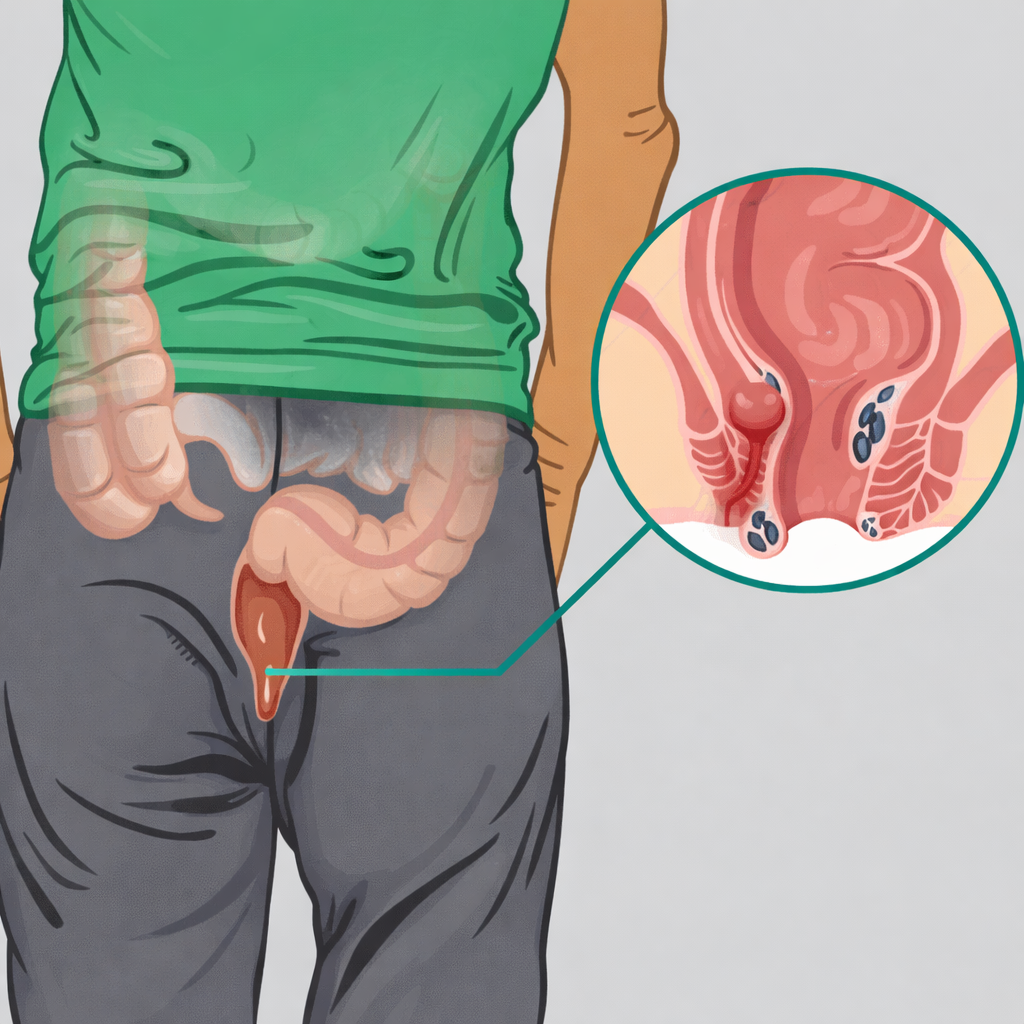
Understanding Anal Fistula
An anal fistula is an abnormal tunnel that forms between the inside of the anal canal and the skin around the anus. This tunnel usually develops after an infection in the anal glands.
When these glands become infected, they may form an abscess, which is a collection of pus. If the abscess drains or bursts, it can leave behind a small channel connecting the infected gland to the skin surface. This channel is known as a fistula.
The problem with an anal fistula is that it often causes recurrent infections, pain, and discharge. Because the tunnel remains open, bacteria can easily enter and cause repeated inflammation.
Patients experiencing these symptoms should consider seeking Anal Fistula Treatment in Jabalpur from an experienced Fistula Specialist in Jabalpur like Dr. Sanjiv Warkhede.
Types of Anal Fistula
Anal fistulas can vary in complexity depending on how the tunnel passes through the muscles surrounding the anus. Understanding the type of fistula helps determine the most appropriate treatment.
Simple Fistula
A simple fistula usually has a single tract and does not involve a large portion of the anal muscles. These fistulas are generally easier to treat and have a lower risk of recurrence.
Complex Fistula
Complex fistulas involve multiple tracts or pass through significant portions of the anal muscles. These require more advanced surgical planning to avoid complications.
Intersphincteric Fistula
This is the most common type of fistula. The tract passes between the internal and external anal sphincter muscles.
Transsphincteric Fistula
In this type, the fistula passes through both sphincter muscles and extends to the skin outside the anus.
Because different types require different surgical approaches, accurate diagnosis by a Fistula Doctor in Jabalpur is essential before starting treatment.
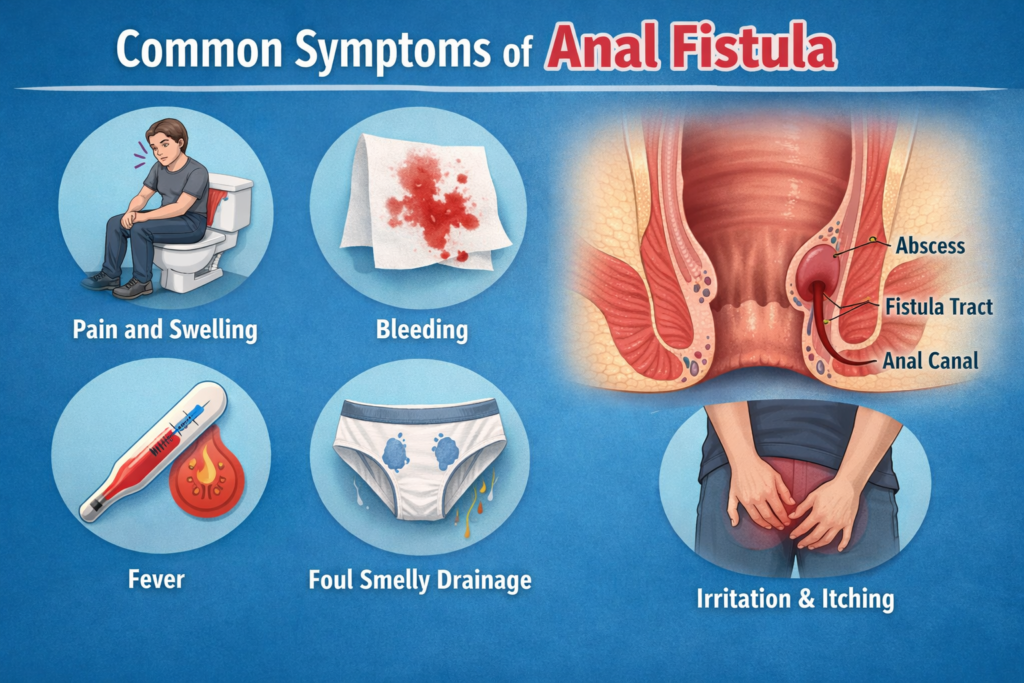
Common Symptoms of Anal Fistula
Anal fistula symptoms can be uncomfortable and persistent. Patients often notice repeated infections and discharge around the anal region.
Common symptoms include:
- Pain and swelling near the anus
- Persistent discharge of pus or fluid
- Recurrent anal abscess formation
- Redness or irritation around the anal opening
- Pain while sitting or during bowel movements
- Unpleasant odor due to discharge
In some cases, the pain may increase when the infection becomes active. The symptoms may temporarily improve if the pus drains, but the infection usually returns because the fistula tract remains.
Patients experiencing these symptoms should seek Anal Fistula Treatment in Jabalpur to prevent repeated infections and complications.
Causes and Risk Factors of Anal Fistula
Anal fistulas usually develop as a result of infection in the anal glands. Several medical conditions and lifestyle factors can increase the risk.
Previous Anal Abscess
The most common cause of an anal fistula is a previously untreated or partially healed anal abscess.
Chronic Infection of Anal Glands
Infection in the glands inside the anal canal can lead to pus formation and fistula development.
Inflammatory Bowel Diseases
Conditions such as Crohn’s disease may increase the risk of fistulas.
Tuberculosis or Other Infections
Certain infections affecting the gastrointestinal tract can lead to fistula formation.
Trauma in the Anal Region
Injury or surgery near the anal area may also lead to fistula formation.
Many patients visiting Surgicare Clinic for Anal Fistula Treatment in Jabalpur have a history of recurrent abscesses before the fistula develops.

When Should You Consult a Fistula Specialist?
Because anal fistulas rarely heal without treatment, it is important to consult a specialist if symptoms appear.
You should consult a Fistula Specialist in Jabalpur if you experience:
- Repeated swelling or abscess near the anus
- Continuous discharge of pus or fluid
- Persistent pain around the anal region
- Skin irritation near the anus
- Fever associated with anal infection
Early consultation with Dr. Sanjiv Warkhede allows proper evaluation and timely Anal Fistula Treatment in Jabalpur before the condition becomes more complex.
Diagnosis of Anal Fistula
Accurate diagnosis is essential for planning effective treatment. At Surgicare Clinic, Dr. Sanjiv Warkhede uses modern diagnostic methods to identify the fistula tract and determine the severity of the condition.
Physical Examination
The doctor examines the anal region to identify the external opening of the fistula.
Digital Rectal Examination
A gentle examination using a gloved finger helps detect abnormalities inside the anal canal.
Proctoscopy
A small instrument called a proctoscope allows the doctor to view the inside of the rectum and identify the internal opening of the fistula.
MRI or Ultrasound
In complex cases, imaging tests such as MRI or ultrasound may be recommended to map the fistula tract accurately.
Accurate diagnosis helps Dr. Sanjiv Warkhede, a trusted Fistula Doctor in Jabalpur, determine the most appropriate treatment plan.
Frequent Asked Question's
Anal fistula usually develops after an infection in the anal glands that forms an abscess. When the abscess drains, it may leave behind a small tunnel connecting the anal canal to the skin. This tunnel becomes a fistula and often requires Anal Fistula Treatment in Jabalpur.
Yes, laser surgery is considered a modern and effective treatment for many fistulas. It closes the fistula tract with minimal damage to surrounding tissues. Many patients prefer Laser Fistula Treatment in Jabalpur because it involves less pain and faster recovery.
The duration of fistula surgery depends on the complexity of the fistula. Most procedures take around 30–60 minutes. Patients undergoing Anal Fistula Surgery in Jabalpur are usually discharged the same day or after short observation.
Recovery varies depending on the type of surgery performed. Patients who undergo Anal Fistula Treatment in Jabalpur with laser techniques often recover within a few days and can gradually return to normal activities.
Many patients trust Dr. Sanjiv Warkhede for Anal Fistula Treatment in Jabalpur because of his 20+ years of experience and specialization in colorectal surgery at Surgicare Clinic.