
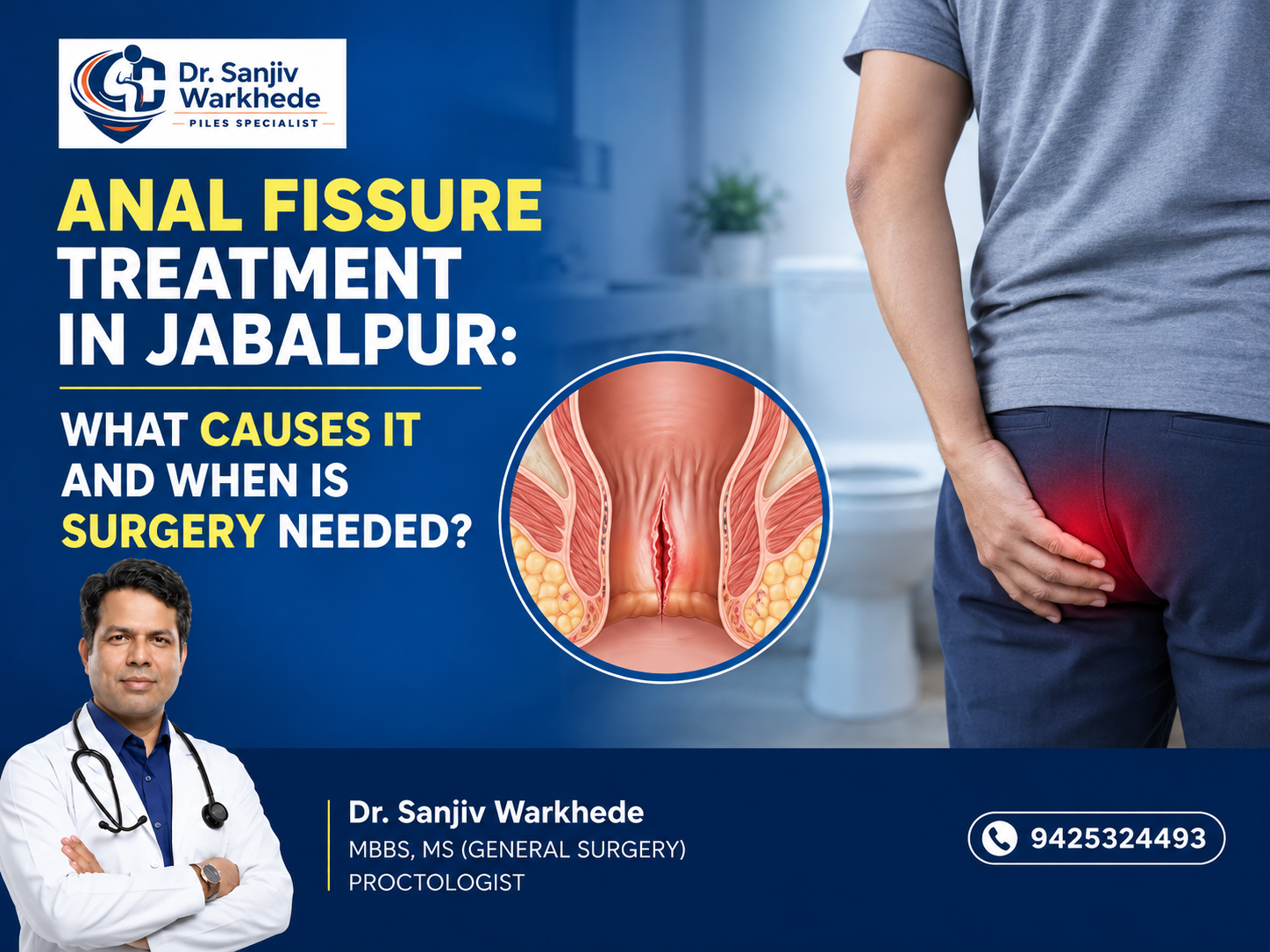
Anal fissures are a common anorectal condition that can cause sharp pain during bowel movements, burning, and bleeding. They occur when a small tear develops in the lining of the anus. Although some fissures heal with simple treatment and lifestyle changes, persistent or chronic fissures may require specialist care. If you are experiencing these symptoms, Anal Fissure Treatment in Jabalpur can help you understand the available options and determine the most appropriate treatment for your condition.
Dr. Sanjiv Warkhede is an experienced colorectal and laparoscopic surgeon with over 20 years of surgical experience. At Surgicare Clinic, he provides evaluation and treatment for anorectal conditions, including piles, anal fissures, fistulas, and pilonidal sinus. Consulting an Anal Fissure Doctor in Jabalpur can help identify the cause of your symptoms and prevent the condition from becoming long-lasting.
What Is an Anal Fissure?
An anal fissure is a small tear in the delicate skin lining the anal canal. It commonly develops when hard stools or excessive straining injure the area. The tear may cause pain during bowel movements, and the discomfort can continue for several minutes or even hours afterward.
Acute fissures are generally short-term and may heal with appropriate care. A fissure that persists for several weeks or develops features of a chronic wound may need further medical assessment.
People looking for Fissure Treatment in Napier Town, Jabalpur should seek medical advice if pain or bleeding continues, returns repeatedly, or interferes with everyday activities. Early assessment can help distinguish a fissure from other conditions that may cause similar symptoms.
What Are the Common Causes of Anal Fissures?
Understanding the cause is an important part of effective Anal Fissure Treatment in Jabalpur. Several factors can contribute to the development of an anal fissure.
1. Constipation and Hard Stools
Passing hard or dry stools can stretch and injure the anal lining. Straining during bowel movements can further aggravate the tear and delay healing.
2. Chronic Diarrhoea
Frequent loose stools can irritate the anal area and contribute to inflammation and skin damage.
3. Excessive Straining
Spending a long time on the toilet or repeatedly straining to pass stools may increase pressure on the anal canal.
4. Previous Anal Injury
An injury or trauma to the anal area can sometimes lead to a fissure.
5. Underlying Medical Conditions
Some anal fissures may be associated with conditions such as inflammatory bowel disease. Recurrent, multiple, or unusually positioned fissures require medical evaluation to identify possible underlying causes. An Anal Fissure Doctor in Jabalpur can assess your symptoms, medical history, and bowel habits to recommend suitable treatment rather than relying only on temporary pain relief.
What Are the Symptoms of an Anal Fissure?
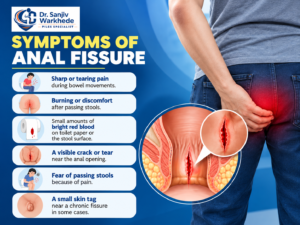
Anal fissure symptoms can range from mild discomfort to severe pain. Common signs include:
- Sharp or tearing pain during bowel movements.
- Burning or discomfort after passing stools.
- Small amounts of bright red blood on toilet paper or the stool surface.
- A visible crack or tear near the anal opening.
- Fear of passing stools because of pain.
- A small skin tag near a chronic fissure in some cases.
If you notice persistent bleeding, do not automatically assume that it is caused by a fissure. Other conditions can produce similar symptoms and may require different treatment.
People seeking Fissure Treatment in Napier Town, Jabalpur should arrange a consultation if symptoms persist, worsen, or repeatedly return. Severe pain, heavy bleeding, fever, or swelling with increasing discomfort should be assessed promptly.
Anal Fissure Treatment in Jabalpur: Available Treatment Options
Treatment depends on the duration of the fissure, symptom severity, bowel habits, and the presence of other medical conditions. Many acute fissures improve without surgery.
1. Dietary Changes and Lifestyle Management
The first step often involves making stools softer and easier to pass. Your doctor may recommend:
- Increasing dietary fibre through fruits, vegetables, and whole grains.
- Drinking sufficient water, unless you have been advised to restrict fluids.
- Avoiding excessive straining during bowel movements.
- Maintaining regular physical activity as appropriate.
- Responding to the urge to pass stools instead of delaying it.
2. Warm Sitz Baths
Sitting in comfortably warm water for around 10–15 minutes, particularly after bowel movements, may help ease discomfort and relax the anal area. The water should not be hot enough to burn the skin.
3. Medicines and Prescription Ointments
A doctor may recommend stool-softening treatment, suitable pain relief, or prescription ointments that help relax the anal sphincter and improve blood flow to the fissure. Some medicines are not suitable for everyone, so they should be used under medical guidance.
For personalised Anal Fissure Treatment in Jabalpur, your surgeon can determine whether conservative care is appropriate or whether further treatment is needed.
4. Specialist Procedures
If the fissure does not heal despite appropriate medical treatment, your surgeon may discuss procedures based on the diagnosis and your individual circumstances. Options may include botulinum toxin injections or surgery for selected chronic fissures.
Not every fissure requires surgery, and the appropriate treatment should be chosen after an examination.
When Is Anal Fissure Surgery Needed?
Surgery may be considered when a fissure becomes chronic, causes persistent symptoms, or fails to respond to an adequate course of non-surgical treatment.
An Anal Fissure Doctor in Jabalpur may discuss surgery if you experience:
- Persistent pain during and after bowel movements.
- A fissure that has not healed despite appropriate treatment.
- Repeated episodes of fissure symptoms.
- Features of a chronic fissure identified during examination.
- Significant effects on daily activities and quality of life.
One established surgical option for selected chronic fissures is lateral internal sphincterotomy, which involves carefully dividing a portion of the internal anal sphincter to reduce excessive muscle pressure and help the fissure heal.
However, this operation is not suitable for every patient. Potential complications include difficulty controlling gas or stools. Your surgeon should discuss the benefits, risks, and alternatives, particularly if you have pre-existing continence problems, previous anal surgery, or other relevant medical conditions.
People looking for a Fissure Doctor Near Russel Chowk, Jabalpur should ask whether surgery is necessary in their case and what non-surgical alternatives remain available.
Is Laser Treatment for Anal Fissures Effective?
Laser treatment is sometimes promoted for anorectal conditions, but the best treatment depends on the specific diagnosis. Laser technology is not automatically superior to established treatment options for every anal fissure.
Your surgeon should explain which procedure is being recommended, the evidence supporting its use, expected recovery, possible complications, and available alternatives. Treatment should be selected according to your medical needs rather than the technology alone.
During a consultation for Anal Fissure Treatment in Jabalpur, ask your doctor whether the fissure is acute or chronic and which treatment is most appropriate for your condition.
Effective Ways to Prevent Anal Fissure Recurrence in Jabalpur
Preventing an anal fissure from returning starts with maintaining healthy bowel habits and following the right treatment plan. Proper care after recovery can help minimise irritation and reduce the chances of developing another tear. Anal Fissure Treatment in Jabalpur focuses on identifying the underlying cause and helping patients manage symptoms effectively.
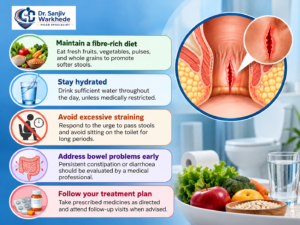
Simple Habits for Better Anal Health
- Maintain a fibre-rich diet: Eat fresh fruits, vegetables, pulses, and whole grains to promote softer stools.
- Stay hydrated: Drink sufficient water throughout the day, unless medically restricted.
- Avoid excessive straining: Respond to the urge to pass stools and avoid sitting on the toilet for long periods.
- Address bowel problems early: Persistent constipation or diarrhoea should be evaluated by a medical professional.
- Follow your treatment plan: Take prescribed medicines as directed and attend follow-up visits when advised
If anal pain or bleeding returns, consult a specialist instead of relying only on home remedies. Early medical evaluation can help identify the cause, prevent complications, and determine the appropriate treatment for faster recovery.
When Should You Consult a Fissure Specialist?
You should seek medical assessment if you have repeated anal pain, bleeding during bowel movements, or symptoms that do not improve with basic care. Prompt evaluation is particularly important when bleeding is heavy, pain is severe, or symptoms occur with fever or swelling.
If you are searching for Fissure Treatment in Napier Town, Jabalpur, choose a qualified surgeon who can examine the affected area, explain the diagnosis, and discuss treatment options clearly.
Patients looking for a Fissure Doctor Near Russel Chowk, Jabalpur should also confirm the clinic’s location and appointment availability before visiting. Early evaluation may help prevent prolonged discomfort and unnecessary delays in treatment.
Why Consult Dr. Sanjiv Warkhede at Surgicare Clinic?
Dr. Sanjiv Warkhede is a colorectal and laparoscopic surgeon with over 20 years of surgical experience. His qualifications include MS and additional surgical fellowships and memberships, including FASCRI, FISCP, FIAGES, and FMAS, as listed in his professional profile.
At Surgicare Clinic, patients can seek evaluation for piles, anal fissures, fistulas, pilonidal sinus, and other surgical conditions. The treatment approach depends on the patient’s diagnosis, symptom severity, medical history, and suitability for different procedures.
If you need Anal Fissure Treatment in Jabalpur, a consultation with Dr. Warkhede can help you understand whether lifestyle measures, medication, or a procedure may be appropriate. Patients searching for an Anal Fissure Doctor in Jabalpur should prioritise an accurate diagnosis and a clear explanation of the benefits and risks of each treatment option.
For patients considering Fissure Treatment in Napier Town, Jabalpur, or searching for a Fissure Doctor Near Russel Chowk, Jabalpur, contact Surgicare Clinic to confirm its current address, appointment availability, and consultation details.
FAQs – Anal Fissure Treatment in Jabalpur
1. Can an Anal Fissure Heal Without Surgery?
Yes, many acute anal fissures can heal without surgery through dietary changes, adequate water intake, warm sitz baths, and prescribed medicines. Dr. Sanjiv Warkhede can evaluate the condition and recommend suitable treatment based on the severity of the fissure and the patient’s symptoms.
2. How Long Does an Anal Fissure Take to Heal?
An acute anal fissure may heal within a few weeks with appropriate treatment. Chronic fissures may take longer and sometimes require additional medical intervention. Following your doctor’s advice, eating fibre-rich foods, drinking enough water, and preventing constipation can support recovery.
3. Is an Anal Fissure 100% Curable?
Many anal fissures heal completely with appropriate treatment, although recurrence is possible. The outcome depends on the duration, severity, and underlying cause. Consulting Dr. Sanjiv Warkhede can help patients understand their condition and explore suitable treatment options.
4. Which Doctor Should I Consult for Anal Fissures in Jabalpur?
A qualified general surgeon or colorectal surgeon can diagnose and treat anal fissures. Patients experiencing anal pain, bleeding during bowel movements, or recurring discomfort can consult Dr. Sanjiv Warkhede for an appropriate evaluation and guidance on available treatment options.
5. Can an Anal Fissure Heal in 2 Days?
Complete healing within two days is uncommon. However, symptoms such as pain and irritation may begin to improve with appropriate care. Warm sitz baths, adequate hydration, fibre-rich foods, and avoiding straining during bowel movements can help relieve discomfort while healing takes place.
6. What Are the Common Symptoms of an Anal Fissure?
Common symptoms include sharp pain during or after passing stools, bright red bleeding, burning sensations, and discomfort around the anus. Some patients may also notice a small lump near the affected area. Persistent symptoms should be assessed by a qualified medical professional.
7. What Causes Anal Fissures?
Anal fissures commonly occur when the delicate lining of the anus develops a tear. Passing hard stools, chronic constipation, excessive straining, and repeated diarrhoea can contribute to this condition. Maintaining regular bowel habits, drinking enough water, and consuming fibre-rich foods may help reduce the risk.
8. Is Laser Treatment Necessary for Anal Fissures?
No, laser treatment is not necessary for every anal fissure. Many cases respond to medication and lifestyle changes, while chronic fissures may require a surgical procedure. Dr. Sanjiv Warkhede can explain appropriate treatment options, depending on the diagnosis and the patient’s medical history.
9. Can Anal Fissures Return After Treatment?
Yes, anal fissures can recur, particularly when constipation, hard stools, or straining continue. Maintaining a fibre-rich diet, drinking sufficient water, and following recommended bowel habits can help reduce the risk. If symptoms return, consult a doctor for further evaluation and treatment guidance.
10. When Should I Consult Dr. Sanjiv Warkhede for an Anal Fissure?
You should seek medical advice if you experience persistent anal pain, bleeding during bowel movements, or recurring discomfort. Dr. Sanjiv Warkhede can assess the symptoms and guide you towards appropriate care. Seek prompt medical attention for severe pain, heavy bleeding, fever, or significant swelling.
Conclusion – Anal Fissure Doctor in Jabalpur
Anal fissures can cause significant discomfort, but appropriate treatment often helps relieve symptoms and promote healing. Managing constipation, avoiding excessive straining, and following medical advice are important first steps. When a fissure becomes chronic or does not respond to conservative treatment, a specialist may recommend further procedures or surgery after discussing the risks and benefits.
For Anal Fissure Treatment in Jabalpur, consult Dr. Sanjiv Warkhede at Surgicare Clinic to discuss your symptoms and suitable treatment options. Whether you need guidance on non-surgical care or an assessment for surgery, an individualised treatment plan can help you make an informed decision about your health.