Many people notice swollen or twisted veins on their legs and assume it is only a cosmetic concern. However, varicose veins often develop due to underlying issues with blood circulation in the legs. Over time, these veins may cause discomfort, heaviness, and swelling if left untreated.
At Surgicare Clinic, patients receive expert guidance and advanced Varicose Veins Treatment in Jabalpur from Dr. Sanjiv Warkhede, an experienced colorectal and laparoscopic surgeon with more than 20 years of surgical experience. By understanding the risk factors that contribute to varicose veins, patients can take steps to prevent the condition or seek timely medical care.
Learning about the causes of varicose veins is important because early intervention can significantly improve both comfort and vein health.
Understanding Varicose Veins
Varicose veins are enlarged, swollen, and twisted veins that usually appear on the legs. They develop when the small valves inside the veins stop working properly. Under normal conditions, these valves help blood flow upward from the legs toward the heart. However, when the valves weaken or become damaged, blood begins to collect inside the veins. As a result, the veins gradually expand and become visible under the skin.
These veins often appear dark blue or purple and may feel raised or bulging. In addition to their appearance, varicose veins can also cause discomfort, swelling, and fatigue in the legs. Many patients seek Varicose Veins Treatment in Jabalpur when symptoms begin to interfere with their daily activities or cause persistent discomfort.
Why Understanding Risk Factors Is Important
Identifying the risk factors that lead to varicose veins is an important step in protecting vein health. Some factors are related to lifestyle habits, while others may be linked to genetics or natural aging. By understanding these risk factors, individuals can make simple changes that may help reduce the chances of developing varicose veins.
Moreover, recognizing early warning signs allows patients to consult a Varicose Veins Doctor in Jabalpur before the condition becomes more severe. Early evaluation often leads to simpler treatment and faster recovery.
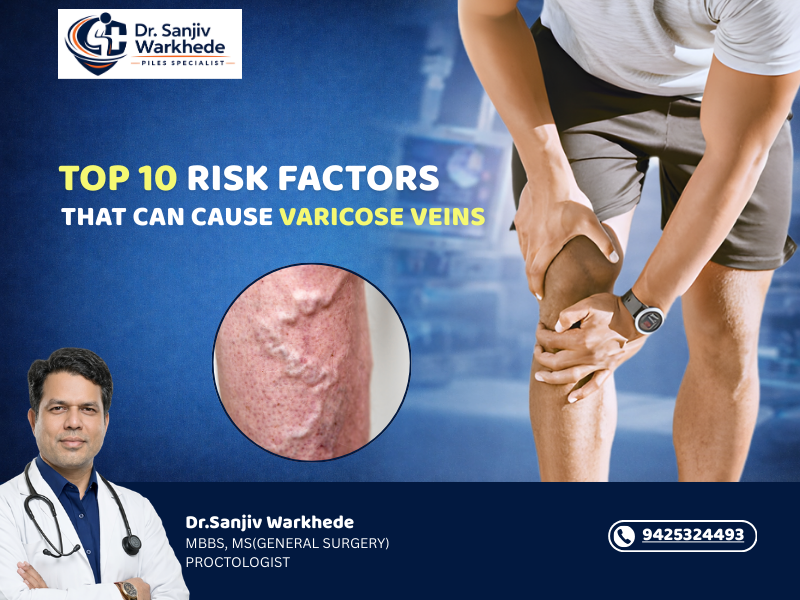
Top 10 Risk Factors That Can Cause Varicose Veins
Several health and lifestyle factors can increase the likelihood of developing varicose veins. Below are some of the most common risk factors that doctors frequently observe.
1. Prolonged Standing or Sitting
Standing or sitting for long periods can put continuous pressure on the veins in the legs. When the muscles remain inactive, blood circulation slows down. As a result, blood may begin to pool in the veins, causing them to stretch and enlarge over time. Many patients who require Leg Vein Treatment in Jabalpur have occupations that involve long hours of standing or sitting.
2. Genetic or Family History
Family history plays an important role in the development of varicose veins. If parents or close relatives have experienced vein problems, the risk may be higher. This occurs because weakened vein walls and valves can sometimes be inherited. Therefore, individuals with a family history should monitor their vein health carefully.
3. Increasing Age
As people grow older, the veins gradually lose their elasticity. The valves inside the veins may also become weaker over time. Because of these natural changes, blood flow can become less efficient. This increases the likelihood of varicose veins developing in older adults. Many patients seeking Varicose Veins Treatment in Jabalpur are in middle age or older, although younger individuals can also develop the condition.
4. Pregnancy
Pregnancy places additional pressure on the veins due to increased blood volume and hormonal changes. The growing uterus also presses on the veins in the pelvis, which can slow blood circulation in the legs. As a result, some women develop varicose veins during pregnancy. In many cases, these veins improve after childbirth. However, some women may require medical evaluation from a Varicose Veins Specialist in Jabalpur if symptoms persist.
5. Obesity or Excess Body Weight
Carrying excess body weight places additional pressure on the veins of the legs. This pressure can weaken the vein walls and valves. Over time, this may lead to the development of enlarged or twisted veins. Maintaining a healthy weight is therefore important for protecting vein health.
6. Lack of Physical Activity
Regular movement helps improve blood circulation in the legs. However, a sedentary lifestyle can reduce muscle activity that normally helps push blood upward through the veins. When circulation slows down, blood may accumulate in the veins, gradually leading to varicose veins. Therefore, doctors often recommend regular physical activity to help prevent vein problems.
7. Hormonal Changes
Hormonal fluctuations can also affect the strength and flexibility of vein walls. Women may experience hormonal changes during pregnancy, menopause, or while using certain medications. These hormonal shifts can sometimes weaken vein valves and increase the risk of varicose veins.
8. Occupations That Require Long Hours of Standing
Certain professions require individuals to stand for extended periods throughout the day. Examples include teachers, healthcare workers, shopkeepers, and factory workers. Prolonged standing can increase pressure in the veins of the legs. Over time, this constant pressure may contribute to the development of varicose veins.
9. Previous Vein Injuries
Injuries to the veins or surrounding tissues can sometimes damage the valves inside the veins. When these valves no longer function properly, blood flow may become disrupted. This can eventually lead to swelling and enlargement of the veins. Patients who have experienced vein injuries should monitor their symptoms and consult a Varicose Veins Doctor in Jabalpur if they notice changes in their veins.
10. Poor Blood Circulation
Poor circulation is one of the underlying causes of many vein problems. When blood does not flow efficiently through the veins, pressure begins to build up. Gradually, this pressure can cause veins to stretch and become visible under the skin. Improving circulation through exercise and lifestyle changes can help reduce this risk.
Common Symptoms of Varicose Veins
Varicose veins often develop slowly, and symptoms may appear gradually. Some people notice only visible veins, while others experience discomfort.
Common symptoms include:
- Visible twisted or bulging veins in the legs
- Heaviness or fatigue in the legs
- Swelling around the ankles
- Burning or throbbing sensation in the veins
- Skin discoloration around affected areas
If these symptoms persist, it is important to consult a Varicose Veins Specialist in Jabalpur for proper evaluation.
When Should You See a Varicose Veins Doctor?
Many people ignore early symptoms of varicose veins because they believe the condition is harmless. However, untreated varicose veins may gradually lead to complications such as skin irritation or ulcers.
You should consider visiting a Varicose Veins Doctor in Jabalpur if you experience:
- Persistent leg pain or heaviness
- Swelling in the lower legs or ankles
- Enlarged veins that continue to grow
- Skin discoloration near the veins
Early consultation allows doctors to recommend effective treatment before the condition worsens.
Varicose Veins Treatment in Jabalpur
Modern medical technology has made the treatment of varicose veins safer and more effective than ever before. At Surgicare Clinic, patients receive advanced Varicose Veins Treatment in Jabalpur under the care of Dr. Sanjiv Warkhede. With more than 20 years of surgical experience, he provides comprehensive evaluation and personalized treatment plans for patients suffering from vein problems.
Treatment options may include minimally invasive procedures, laser therapy, or Varicose Veins Surgery in Jabalpur for more advanced cases. These modern techniques focus on improving circulation, reducing symptoms, and restoring the appearance of healthy legs. Many patients seeking the Best Varicose Veins Treatment in Jabalpur choose Surgicare Clinic because of its patient-centered approach and advanced surgical care.
Tips to Reduce the Risk of Varicose Veins
Although some risk factors cannot be avoided, certain lifestyle changes may help reduce the chances of developing varicose veins.
Some helpful preventive measures include:
- Staying physically active with regular exercise
- Maintaining a healthy body weight
- Avoiding prolonged sitting or standing
- Elevating legs during rest to improve circulation
- Wearing compression stockings if recommended by a doctor
These habits can help improve blood flow and support overall vein health.
Frequently Asked Questions (FAQs)
What are the early signs of varicose veins?
Early signs often include visible veins on the legs, mild swelling in the ankles, and heaviness in the legs after long periods of standing. Some patients may also feel burning or itching near the veins.
Can varicose veins be prevented?
Although not all cases can be prevented, maintaining a healthy lifestyle can help reduce risk. Regular exercise, healthy weight management, and avoiding prolonged sitting can support good circulation.
Are varicose veins dangerous if untreated?
In many cases, varicose veins start as a mild condition. However, if ignored for a long time, they may lead to swelling, skin discoloration, or ulcers. Therefore, early Varicose Veins Treatment in Jabalpur can help prevent complications.
What treatments are available for varicose veins?
Treatment options may include lifestyle changes, compression therapy, laser procedures, or Varicose Veins Surgery in Jabalpur depending on the severity of the condition.
Who provides the best varicose veins treatment in Jabalpur?
Patients looking for the Best Varicose Veins Treatment in Jabalpur often consult Dr. Sanjiv Warkhede at Surgicare Clinic. With over 20 years of surgical experience, he provides modern and effective treatment for vein-related conditions.