
Hernia Surgery in Jabalpur
- Home
- Hernia Surgery
A hernia is a common surgical condition that occurs when an internal organ or tissue pushes through a weak area in the surrounding muscle wall. Many people first notice a small bulge or swelling in the abdomen or groin, which may become more noticeable when standing, coughing, or lifting heavy objects. Although the swelling may initially be painless, a hernia does not heal on its own and usually requires medical attention.
Ignoring a hernia can lead to discomfort and, in some cases, serious complications. Early evaluation helps ensure timely treatment and prevents the condition from worsening. At Surgicare Clinic, patients receive expert Hernia Surgery in Jabalpur under the care of Dr. Sanjiv Warkhede, a highly experienced Colorectal & Laparoscopic Surgeon with more than 20 years of surgical expertise.
With modern techniques such as Laparoscopic Hernia Surgery in Jabalpur, patients can benefit from minimally invasive procedures that offer faster recovery and reduced discomfort.
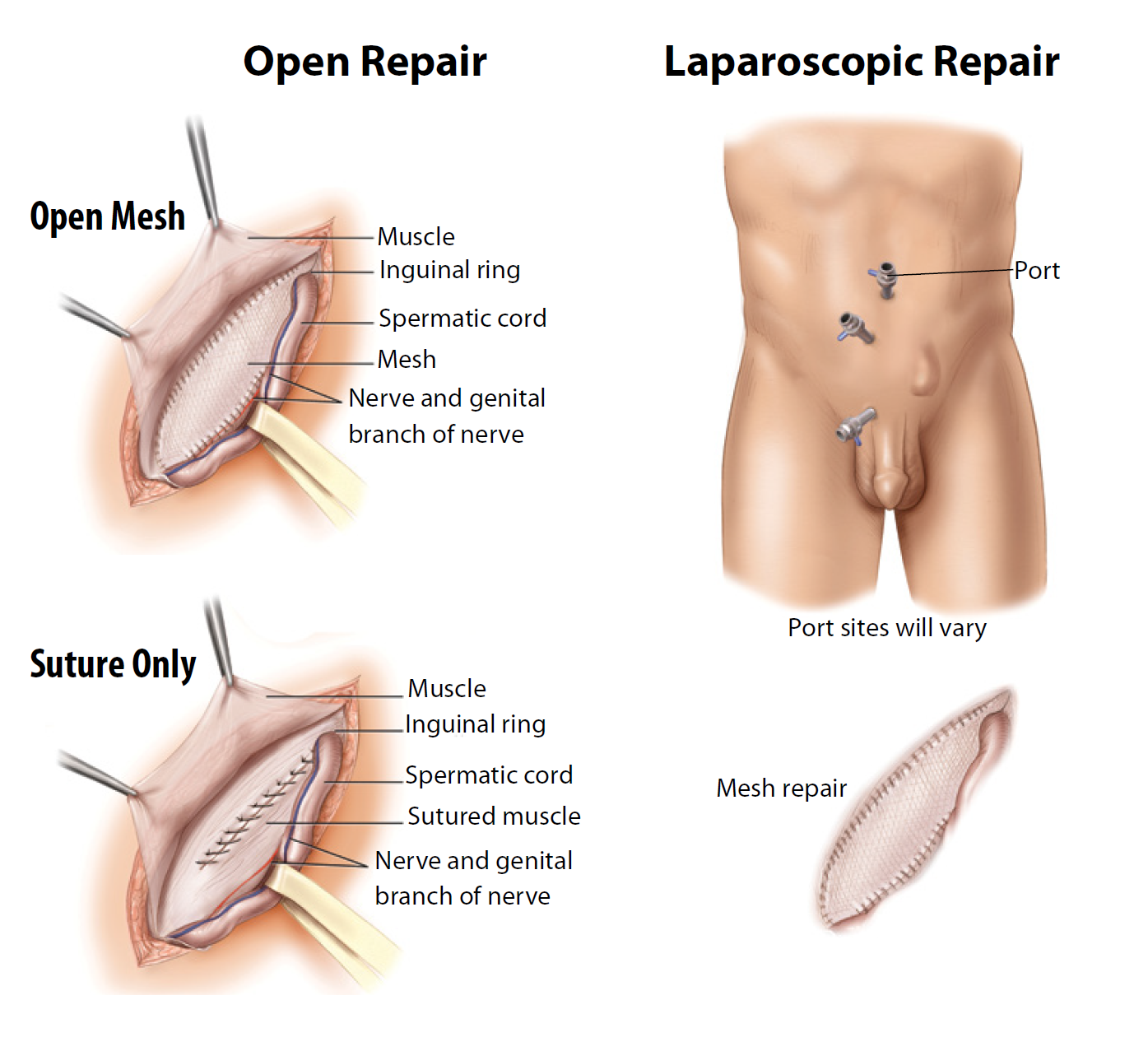
Understanding Hernia
A hernia develops when an internal organ, usually part of the intestine or fatty tissue, pushes through a weak spot in the abdominal muscles. This weakness may be present from birth or may develop gradually due to strain on the abdominal wall.
The most common sign of a hernia is a visible bulge or swelling, which may become more prominent when standing or straining. Some patients may also experience pain or discomfort during physical activity.
Although a hernia may seem harmless at first, it can enlarge over time and lead to complications if untreated. Therefore, timely Hernia Treatment in Jabalpur is important to prevent worsening symptoms.
At Surgicare Clinic, Dr. Sanjiv Warkhede carefully evaluates each patient and recommends the most suitable Hernia Surgery in Jabalpur based on the type and severity of the hernia.
Types of Hernia
Hernias can occur in different parts of the abdomen or groin. Each type may require a specific surgical approach.
Inguinal Hernia
Inguinal hernia is the most common type of hernia. It occurs in the groin when part of the intestine pushes through a weak spot in the lower abdominal wall.
Umbilical Hernia
Umbilical hernia occurs near the navel (belly button). It is commonly seen in infants but can also affect adults.
Incisional Hernia
This type of hernia develops at the site of a previous surgical incision. Weakness in the surgical scar allows tissue to protrude through the abdominal wall.
Hiatal Hernia
A hiatal hernia occurs when part of the stomach pushes through the diaphragm into the chest cavity.
Because different types of hernias behave differently, consulting a Hernia Specialist in Jabalpur such as Dr. Sanjiv Warkhede helps determine the most effective treatment plan.
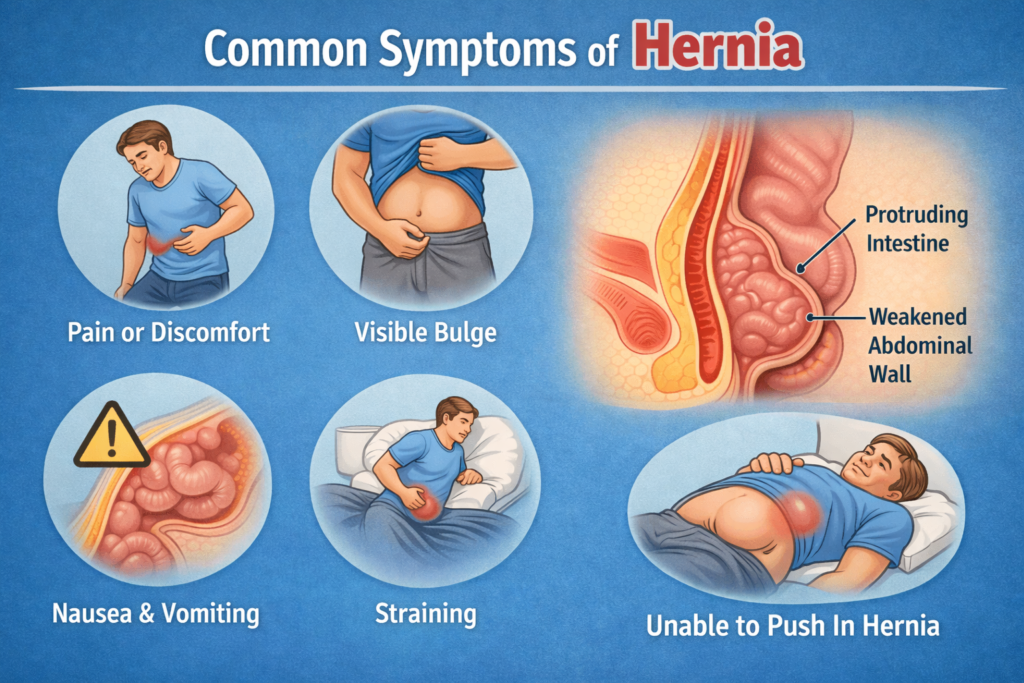
Common Symptoms of Hernia
The symptoms of hernia can vary depending on its type and severity. Many patients initially notice a small swelling that becomes more prominent over time.
Common symptoms include:
• Visible bulge in the abdomen or groin
• Pain or discomfort while lifting or bending
• Feeling of heaviness in the abdomen
• Swelling that becomes noticeable when standing
• Burning or aching sensation near the bulge
Some patients may also experience discomfort while coughing, laughing, or performing physical activities. If untreated, the swelling may gradually enlarge and become more painful. Patients experiencing these symptoms should consult a Hernia Doctor in Jabalpur for proper evaluation. At Surgicare Clinic, Dr. Sanjiv Warkhede provides advanced Hernia Surgery in Jabalpur to help patients achieve long-term relief.
Causes and Risk Factors of Hernia
Hernias develop due to a combination of muscle weakness and increased pressure inside the abdomen.
Common causes and risk factors include:
Weak Abdominal Muscles
Some individuals are born with naturally weak abdominal walls.
Heavy Lifting
Repeated heavy lifting can strain the abdominal muscles and cause a hernia.
Chronic Coughing
Persistent coughing increases pressure inside the abdomen and may lead to hernia formation.
Obesity
Excess body weight places additional stress on the abdominal wall.
Pregnancy
During pregnancy, increased pressure in the abdomen may weaken muscles.
Previous Abdominal Surgery
Surgical scars may weaken the abdominal wall and increase the risk of incisional hernia.
Patients experiencing these risk factors should seek Hernia Treatment in Jabalpur if they notice swelling or discomfort.

When Should You Consult a Hernia Specialist?
Many people delay treatment because the swelling may not cause severe pain initially. However, hernias do not heal without surgery and may gradually worsen.
You should consult a Hernia Specialist in Jabalpur if you experience:
• A visible bulge in the abdomen or groin
• Pain while lifting, coughing, or bending
• Increasing swelling over time
• Persistent discomfort or heaviness in the abdomen
• Nausea or severe pain near the bulge
Early consultation with Dr. Sanjiv Warkhede allows timely Hernia Surgery in Jabalpur before complications develop.
Diagnosis of Hernia
Diagnosing a hernia usually involves a simple clinical examination. At Surgicare Clinic, Dr. Sanjiv Warkhede uses modern diagnostic techniques to confirm the condition and determine its severity.
Physical Examination
The doctor examines the abdomen and groin area to detect swelling or bulging.
Ultrasound
Ultrasound imaging helps visualize the hernia and identify the tissue involved.
CT Scan
In complex cases, CT scans may be recommended to obtain detailed images of the abdominal structures.
Accurate diagnosis helps determine the most appropriate Hernia Treatment in Jabalpur.
Frequent Asked Question's
Early symptoms of hernia include a small bulge in the abdomen or groin, discomfort while lifting or bending, and a feeling of heaviness. The swelling may become more visible when standing or coughing. If these symptoms persist, seeking Hernia Treatment in Jabalpur is recommended.
Yes, Laparoscopic Hernia Surgery in Jabalpur is considered a safe and effective procedure. It uses small incisions and advanced surgical instruments, which help reduce pain and allow faster recovery compared to traditional surgery.
The duration of Hernia Surgery in Jabalpur usually ranges from 30 to 60 minutes depending on the type and complexity of the hernia. Most patients are discharged the same day or after short observation.
Recovery depends on the surgical technique used. Patients undergoing Hernia Surgery in Jabalpur with laparoscopic methods often recover within one to two weeks and gradually return to normal activities.
Many patients trust Dr. Sanjiv Warkhede for Hernia Surgery in Jabalpur because of his 20+ years of surgical experience and expertise in laparoscopic and general surgery at Surgicare Clinic.