
March 13, 2026

Uncategorized

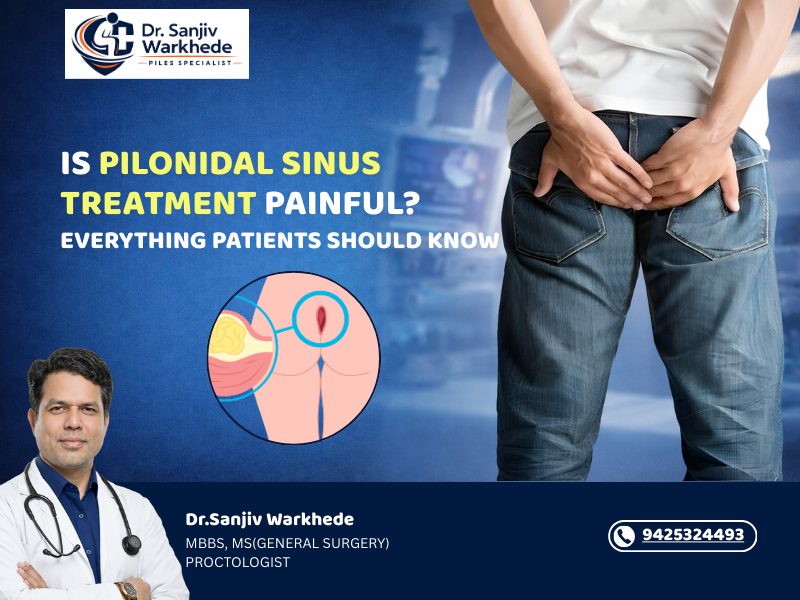
Is Pilonidal Sinus Treatment Painful? Everything Patients Should Know

Many patients who are diagnosed with pilonidal sinus often worry about one important question is the treatment painful? The concern is understandable because the condition itself can cause discomfort, swelling, and difficulty sitting for long periods. However, modern medical advancements have significantly improved the way this condition is treated. Today, procedures are designed to be safer, minimally invasive, and much more comfortable for patients. At Surgicare Clinic, patients receive advanced Pilonidal Sinus Treatment in Jabalpur from Dr. Sanjiv Warkhede, an experienced colorectal and laparoscopic surgeon with more than 20 years of surgical experience. With modern treatment techniques and patient-focused care, he helps individuals recover from pilonidal sinus with minimal pain and faster healing. Understanding the condition and available treatment options can help patients feel more confident and less anxious about seeking medical care. What Is Pilonidal Sinus? A pilonidal sinus is a small tunnel or cyst that forms under the skin near the tailbone, usually at the top of the buttock crease. This condition often develops when loose hair penetrates the skin and causes irritation or infection. Over time, the body treats the trapped hair as a foreign object. As a result, a small pocket forms under the skin, which can fill with fluid, pus, or debris. If the cyst becomes infected, it may turn into an abscess, causing pain and swelling. This is when many patients begin searching for Pilonidal Sinus Treatment in Jabalpur to relieve their symptoms and prevent further complications. Why Does Pilonidal Sinus Cause Pain? Pain occurs mainly because of infection and inflammation in the affected area. When bacteria enter the sinus cavity, the body’s immune system responds by sending infection-fighting cells to the site. This reaction causes swelling, redness, and pus formation. As pressure builds inside the sinus, the surrounding tissues become tender and painful. Sitting for long periods may increase this pressure, making the discomfort worse. Therefore, timely medical care from a Pilonidal Sinus Specialist in Jabalpur can help control infection and prevent the condition from becoming more severe. Common Symptoms of Pilonidal Sinus The symptoms of pilonidal sinus can vary depending on whether the cyst is infected. Some patients may notice only mild discomfort, while others experience significant pain. Common symptoms include: Pain or tenderness near the tailbone Swelling or redness in the affected area Discharge of pus or blood from the sinus opening Foul-smelling fluid from the infected site Difficulty sitting for long periods In some cases, patients may also experience fever if the infection becomes severe. Anyone experiencing these symptoms should consider consulting a Pilonidal Sinus Doctor in Jabalpur for proper evaluation and treatment. Is Pilonidal Sinus Treatment Painful? One of the most common concerns among patients is whether the treatment will be painful. Fortunately, modern medical techniques have made the procedure much more comfortable than in the past. In most cases, the treatment is performed under local or spinal anesthesia. This means patients do not feel pain during the procedure itself. After treatment, some mild discomfort may occur as the area heals. However, doctors usually prescribe medications to control pain and prevent infection. At Surgicare Clinic, Dr. Sanjiv Warkhede focuses on advanced and minimally invasive procedures that reduce discomfort and promote faster healing. Therefore, patients undergoing Pilonidal Sinus Treatment in Jabalpur can expect a safe and manageable treatment experience. Modern Treatment Options for Pilonidal Sinus The treatment approach depends on the severity of the condition and whether infection is present. Medication and Infection Control In the early stages, when infection is mild, doctors may prescribe antibiotics and anti-inflammatory medications. These medicines help control infection and reduce swelling. However, medication alone may not completely eliminate the sinus. Therefore, further treatment may be required if the condition persists. Laser Pilonidal Sinus Treatment Modern laser procedures have become a preferred option for many patients. In Laser Pilonidal Sinus Treatment in Jabalpur, a specialized laser device is used to clean and close the sinus tract. The laser energy destroys infected tissue while preserving healthy surrounding tissue. Because the procedure is minimally invasive, patients experience less pain and faster recovery. Surgical Treatment for Pilonidal Sinus In severe or recurrent cases, Pilonidal Sinus Surgery in Jabalpur may be recommended. During surgery, the surgeon removes the infected sinus tract and cleans the affected area. Modern surgical techniques focus on reducing tissue damage and promoting faster healing. At Surgicare Clinic, Dr. Sanjiv Warkhede carefully evaluates each patient before recommending the most suitable treatment option. Laser Pilonidal Sinus Treatment in Jabalpur Many patients today prefer minimally invasive procedures because they offer quicker recovery and less discomfort. At Surgicare Clinic, patients receive advanced Laser Pilonidal Sinus Treatment in Jabalpur performed by Dr. Sanjiv Warkhede, who has extensive experience in treating colorectal conditions. Laser treatment allows precise removal of infected tissue while minimizing damage to surrounding skin. The procedure usually takes a short time and may allow patients to return home the same day. Because of these advantages, laser treatment is becoming one of the most effective solutions for Pilonidal Sinus Treatment in Jabalpur. Benefits of Modern Pilonidal Sinus Treatment Advancements in surgical technology have made treatment much more comfortable and effective. Patients undergoing modern Pilonidal Sinus Treatment in Jabalpur often experience several benefits, including: Minimal pain during and after the procedure Less bleeding during surgery Short hospital stay Faster healing and recovery Lower risk of recurrence These benefits allow patients to resume normal daily activities sooner. Recovery After Pilonidal Sinus Surgery Recovery time depends on the type of treatment performed and the patient’s overall health. Most patients recover gradually within a few weeks after Pilonidal Sinus Surgery in Jabalpur. During this period, proper wound care and hygiene are essential for healing. Doctors usually recommend: Keeping the area clean and dry Avoiding prolonged sitting Following prescribed medications Attending follow-up appointments At Surgicare Clinic, Dr. Sanjiv Warkhede provides detailed post-treatment instructions to ensure a smooth recovery. Tips to Prevent Pilonidal Sinus Recurrence Although treatment can remove the infected sinus, certain lifestyle habits can help prevent recurrence. Some helpful preventive measures include: Maintaining proper hygiene in the tailbone area Avoiding prolonged sitting whenever possible Removing
Uncategorized

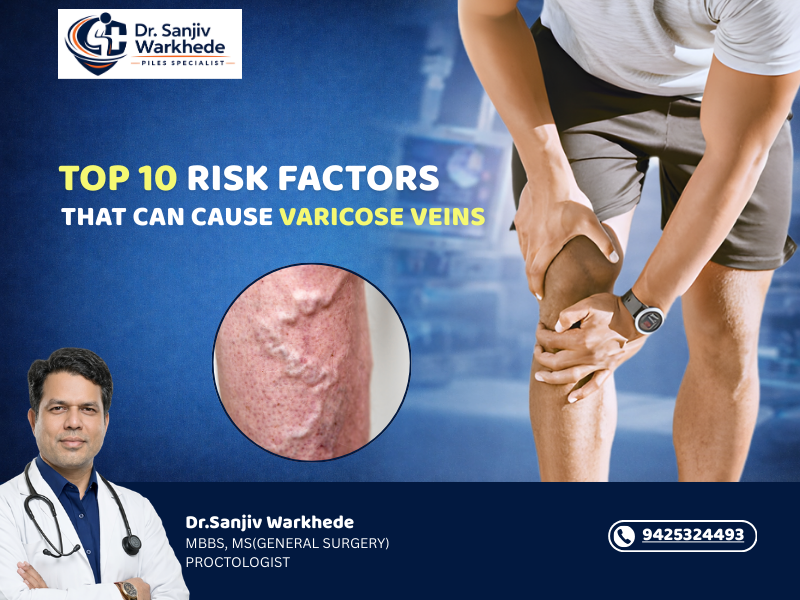
Top 10 Risk Factors That Can Cause Varicose Veins

Many people notice swollen or twisted veins on their legs and assume it is only a cosmetic concern. However, varicose veins often develop due to underlying issues with blood circulation in the legs. Over time, these veins may cause discomfort, heaviness, and swelling if left untreated. At Surgicare Clinic, patients receive expert guidance and advanced Varicose Veins Treatment in Jabalpur from Dr. Sanjiv Warkhede, an experienced colorectal and laparoscopic surgeon with more than 20 years of surgical experience. By understanding the risk factors that contribute to varicose veins, patients can take steps to prevent the condition or seek timely medical care. Learning about the causes of varicose veins is important because early intervention can significantly improve both comfort and vein health. Understanding Varicose Veins Varicose veins are enlarged, swollen, and twisted veins that usually appear on the legs. They develop when the small valves inside the veins stop working properly. Under normal conditions, these valves help blood flow upward from the legs toward the heart. However, when the valves weaken or become damaged, blood begins to collect inside the veins. As a result, the veins gradually expand and become visible under the skin. These veins often appear dark blue or purple and may feel raised or bulging. In addition to their appearance, varicose veins can also cause discomfort, swelling, and fatigue in the legs. Many patients seek Varicose Veins Treatment in Jabalpur when symptoms begin to interfere with their daily activities or cause persistent discomfort. Why Understanding Risk Factors Is Important Identifying the risk factors that lead to varicose veins is an important step in protecting vein health. Some factors are related to lifestyle habits, while others may be linked to genetics or natural aging. By understanding these risk factors, individuals can make simple changes that may help reduce the chances of developing varicose veins.  Moreover, recognizing early warning signs allows patients to consult a Varicose Veins Doctor in Jabalpur before the condition becomes more severe. Early evaluation often leads to simpler treatment and faster recovery. Top 10 Risk Factors That Can Cause Varicose Veins Several health and lifestyle factors can increase the likelihood of developing varicose veins. Below are some of the most common risk factors that doctors frequently observe. 1. Prolonged Standing or Sitting Standing or sitting for long periods can put continuous pressure on the veins in the legs. When the muscles remain inactive, blood circulation slows down. As a result, blood may begin to pool in the veins, causing them to stretch and enlarge over time. Many patients who require Leg Vein Treatment in Jabalpur have occupations that involve long hours of standing or sitting. 2. Genetic or Family History Family history plays an important role in the development of varicose veins. If parents or close relatives have experienced vein problems, the risk may be higher. This occurs because weakened vein walls and valves can sometimes be inherited. Therefore, individuals with a family history should monitor their vein health carefully. 3. Increasing Age As people grow older, the veins gradually lose their elasticity. The valves inside the veins may also become weaker over time. Because of these natural changes, blood flow can become less efficient. This increases the likelihood of varicose veins developing in older adults. Many patients seeking Varicose Veins Treatment in Jabalpur are in middle age or older, although younger individuals can also develop the condition. 4. Pregnancy Pregnancy places additional pressure on the veins due to increased blood volume and hormonal changes. The growing uterus also presses on the veins in the pelvis, which can slow blood circulation in the legs. As a result, some women develop varicose veins during pregnancy. In many cases, these veins improve after childbirth. However, some women may require medical evaluation from a Varicose Veins Specialist in Jabalpur if symptoms persist. 5. Obesity or Excess Body Weight  Carrying excess body weight places additional pressure on the veins of the legs. This pressure can weaken the vein walls and valves. Over time, this may lead to the development of enlarged or twisted veins. Maintaining a healthy weight is therefore important for protecting vein health. 6. Lack of Physical Activity Regular movement helps improve blood circulation in the legs. However, a sedentary lifestyle can reduce muscle activity that normally helps push blood upward through the veins.  When circulation slows down, blood may accumulate in the veins, gradually leading to varicose veins. Therefore, doctors often recommend regular physical activity to help prevent vein problems. 7. Hormonal Changes Hormonal fluctuations can also affect the strength and flexibility of vein walls. Women may experience hormonal changes during pregnancy, menopause, or while using certain medications. These hormonal shifts can sometimes weaken vein valves and increase the risk of varicose veins. 8. Occupations That Require Long Hours of Standing Certain professions require individuals to stand for extended periods throughout the day. Examples include teachers, healthcare workers, shopkeepers, and factory workers. Prolonged standing can increase pressure in the veins of the legs. Over time, this constant pressure may contribute to the development of varicose veins. 9. Previous Vein Injuries Injuries to the veins or surrounding tissues can sometimes damage the valves inside the veins. When these valves no longer function properly, blood flow may become disrupted. This can eventually lead to swelling and enlargement of the veins. Patients who have experienced vein injuries should monitor their symptoms and consult a Varicose Veins Doctor in Jabalpur if they notice changes in their veins. 10. Poor Blood Circulation Poor circulation is one of the underlying causes of many vein problems. When blood does not flow efficiently through the veins, pressure begins to build up. Gradually, this pressure can cause veins to stretch and become visible under the skin. Improving circulation through exercise and lifestyle changes can help reduce this risk. Common Symptoms of Varicose Veins Varicose veins often develop slowly, and symptoms may appear gradually. Some people notice only visible veins, while others experience discomfort. Common symptoms include: Visible twisted or bulging veins in the legs Heaviness or fatigue in the legs Swelling around the ankles Burning or throbbing sensation in the veins Skin discoloration

Uncategorized

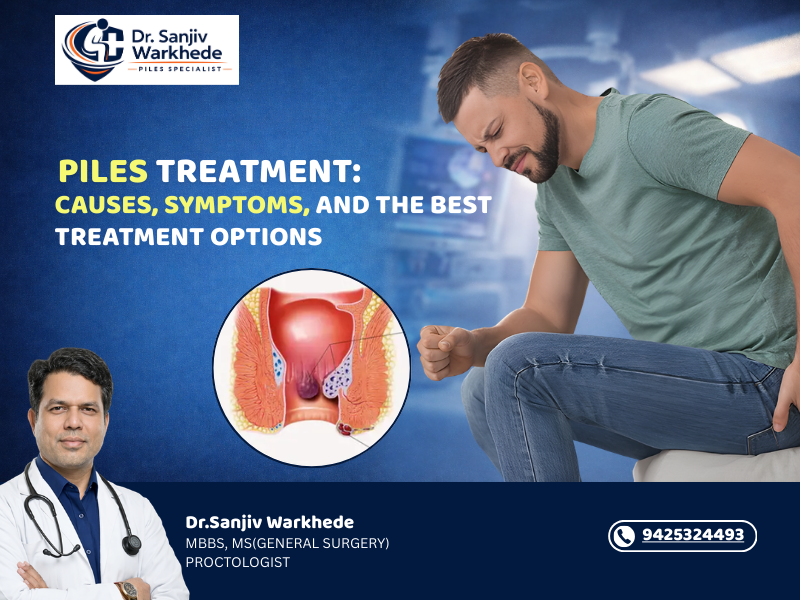
Piles Treatment: Causes, Symptoms, and the Best Treatment Options

Many people experience discomfort, itching, or bleeding during bowel movements but hesitate to discuss these symptoms due to embarrassment. However, piles are a very common medical condition that can affect people of all ages. When treated early, most patients recover quickly and comfortably. At Surgicare Clinic, patients receive advanced and reliable Piles Treatment in Jabalpur under the care of Dr. Sanjiv Warkhede, an experienced colorectal and laparoscopic surgeon with more than 20 years of surgical experience. With modern treatment methods and patient-focused care, he helps individuals find lasting relief from piles and related symptoms. Understanding the causes, symptoms, and treatment options for piles can help patients seek timely medical care and avoid complications. What Are Piles (Hemorrhoids)? Piles, also known as hemorrhoids, are swollen and inflamed veins located in the lower rectum or around the anus. These veins can become enlarged due to increased pressure in the anal region. When this pressure builds up, the veins gradually stretch and swell. As a result, patients may experience discomfort, itching, or bleeding during bowel movements. Piles are similar to varicose veins but occur in the anal region. In many cases, mild piles can improve with lifestyle changes. However, moderate or severe piles may require medical treatment. At Surgicare Clinic, Dr. Sanjiv Warkhede provides comprehensive Hemorrhoids Treatment in Jabalpur, helping patients manage symptoms effectively and regain comfort in daily life. Types of Piles Piles can develop in different forms depending on their location and severity. Understanding the type of piles helps doctors recommend the most suitable treatment. Internal Piles Internal piles develop inside the rectum and are usually not visible from outside. They often cause painless bleeding during bowel movements. Because internal piles occur inside the anal canal, patients may not feel pain initially. However, they can cause discomfort if they grow larger. External Piles External piles form under the skin around the anus. These piles can be painful and may cause swelling, itching, or irritation. Patients often feel a small lump near the anal opening when external piles develop. Prolapsed Piles In some cases, internal piles may enlarge and protrude outside the anus. This condition is known as prolapsed piles. Prolapsed piles can cause pain, discomfort, and difficulty during bowel movements. Thrombosed Piles Thrombosed piles occur when a blood clot forms inside an external hemorrhoid. This condition can cause sudden severe pain and swelling. Patients experiencing such symptoms should consult a Piles Specialist in Jabalpur for immediate medical evaluation. Common Causes of Piles Several factors can contribute to the development of piles. Most of these factors increase pressure in the rectal veins. Chronic Constipation Frequent constipation is one of the most common causes of piles. Straining during bowel movements places extra pressure on the rectal veins. Straining During Bowel Movements Repeated straining weakens the veins in the anal region and gradually leads to swelling. Low-Fiber Diet A diet lacking fiber can lead to hard stools and difficulty passing bowel movements. Prolonged Sitting Sitting for long periods, especially on the toilet, increases pressure in the rectal area. Pregnancy During pregnancy, increased pressure on abdominal veins can lead to the development of piles. Obesity Excess body weight also increases pressure on the veins around the rectum. Patients experiencing these risk factors often seek Piles Treatment in Jabalpur to relieve discomfort and prevent worsening symptoms. Symptoms of Piles You Should Not Ignore The symptoms of piles can vary depending on their type and severity. However, some warning signs should never be ignored. Common symptoms include: Bleeding during bowel movements Pain or discomfort while sitting Itching around the anus Swelling near the anal opening Mucus discharge Feeling of incomplete bowel movement These symptoms may appear mild at first but can gradually worsen over time. Therefore, patients experiencing these signs should consult a Piles Doctor in Jabalpur for proper diagnosis and treatment. How Piles Are Diagnosed Proper diagnosis is important before starting treatment. At Surgicare Clinic, patients undergoing Piles Treatment in Jabalpur receive a detailed examination to determine the type and severity of the condition. Physical Examination The doctor first checks for visible swelling, lumps, or external hemorrhoids around the anus. Digital Rectal Examination During this test, the doctor gently examines the rectal area using a gloved finger to detect internal abnormalities. Proctoscopy A proctoscope may be used to examine the inside of the anal canal and rectum more clearly. These diagnostic procedures help Dr. Sanjiv Warkhede, a trusted Piles Specialist in Jabalpur, identify the best treatment approach for each patient. Best Treatment Options for Piles The treatment for piles depends on the severity of symptoms and the type of hemorrhoids. Many patients recover with conservative treatment, while others may require advanced procedures. Lifestyle and Dietary Changes For mild cases, lifestyle modifications can significantly improve symptoms. Patients are usually advised to: Eat a fiber-rich diet including fruits and vegetables Drink plenty of water Avoid prolonged sitting Maintain regular bowel habits These changes help soften stools and reduce strain during bowel movements. Medications for Piles Certain medications may be prescribed to relieve symptoms such as pain, swelling, or itching. These medications may include creams, ointments, or oral medicines that help reduce inflammation and discomfort. However, medications usually provide temporary relief and may not completely cure advanced piles. Laser Treatment for Piles Modern medical technology has introduced laser treatment for piles, which is one of the most effective and comfortable treatment options available today.  Laser treatment uses focused laser energy to shrink or remove swollen hemorrhoidal tissue. The procedure is minimally invasive and causes minimal damage to surrounding tissues. As a result, patients experience less pain and faster recovery compared to traditional surgery. Laser Piles Treatment in Jabalpur Patients seeking advanced Piles Treatment in Jabalpur often benefit from modern laser procedures available at Surgicare Clinic. Dr. Sanjiv Warkhede, an experienced colorectal surgeon, specializes in Laser Treatment for Piles in Jabalpur. This modern procedure allows precise removal of hemorrhoidal tissue while minimizing discomfort for the patient. Laser piles surgery is usually performed as a short procedure, and many patients are able to return home on the same day. Because of

LET US CONTACT YOU